Instability in the Strait of Hormuz has once again shown how a few kilometers of sea can directly interfere with the global economy. Navigation restrictions caused by the Middle East conflict have raised operational costs, disrupted container flows, and forced major shipowners to reorganize their networks.
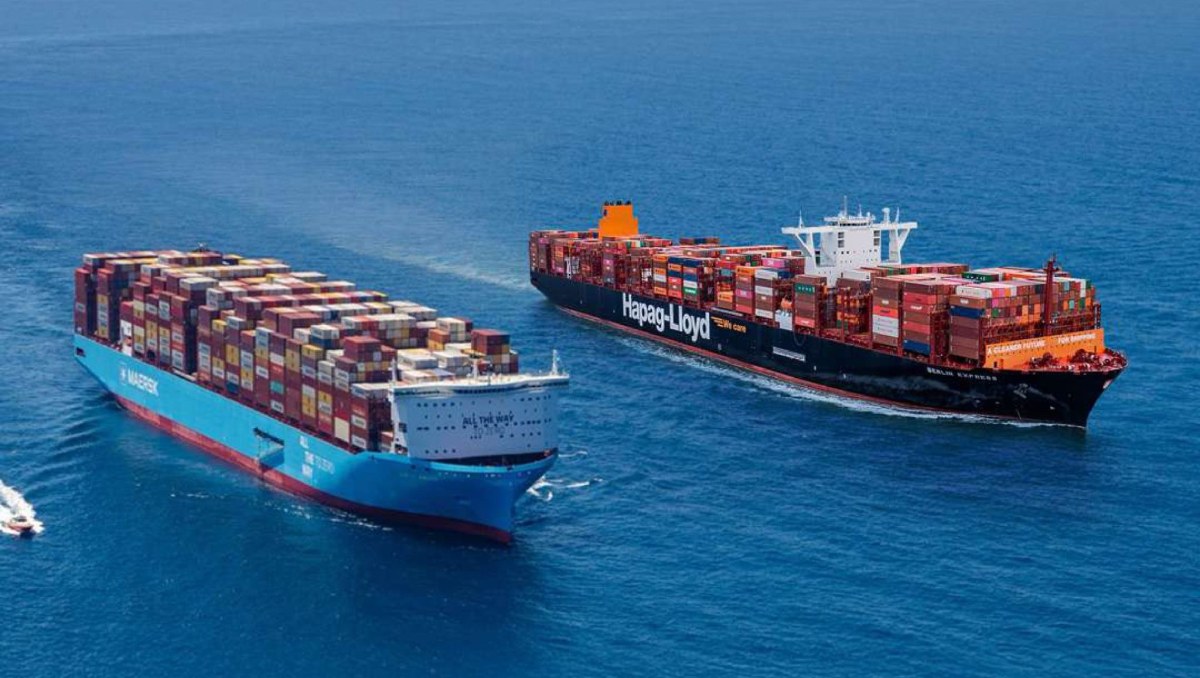
Among the companies affected are two giants of global maritime transport: Maersk and Hapag-Lloyd. Although they face the same geopolitical scenario, the effects on their balance sheets have been different.
In the first quarter, Maersk reported that the conflict still had limited financial impact despite suspension of operations through the Strait of Hormuz. The company recorded EBITDA of US$ 1.8 billion and EBIT of US$ 340 million in the period. The Ocean division, however, suffered from lower freight rates and posted a negative EBIT of US$ 192 million.
Maersk manages to pass on part of the costs
One of the explanations lies in the strategy adopted by the Danish company to face the crisis.
Maersk informed investors that part of the cost increase resulting from the Middle East situation was being recovered through higher spot freight rates, surcharges, and adjustment mechanisms related to fuel prices.
The situation also required complex operational reorganization. In June, the Maersk Baltimore and another vessel chartered by the company managed to transit Hormuz and leave the Persian Gulf following safety assessments and coordination with specialized partners.
At the start of the conflict, approximately 47,000 Maersk containers were destined for the Gulf region. By the end of June, approximately 44,000 had already been delivered, with about 3,000 remaining awaiting completion of transport.
Hapag-Lloyd feels heavier impact
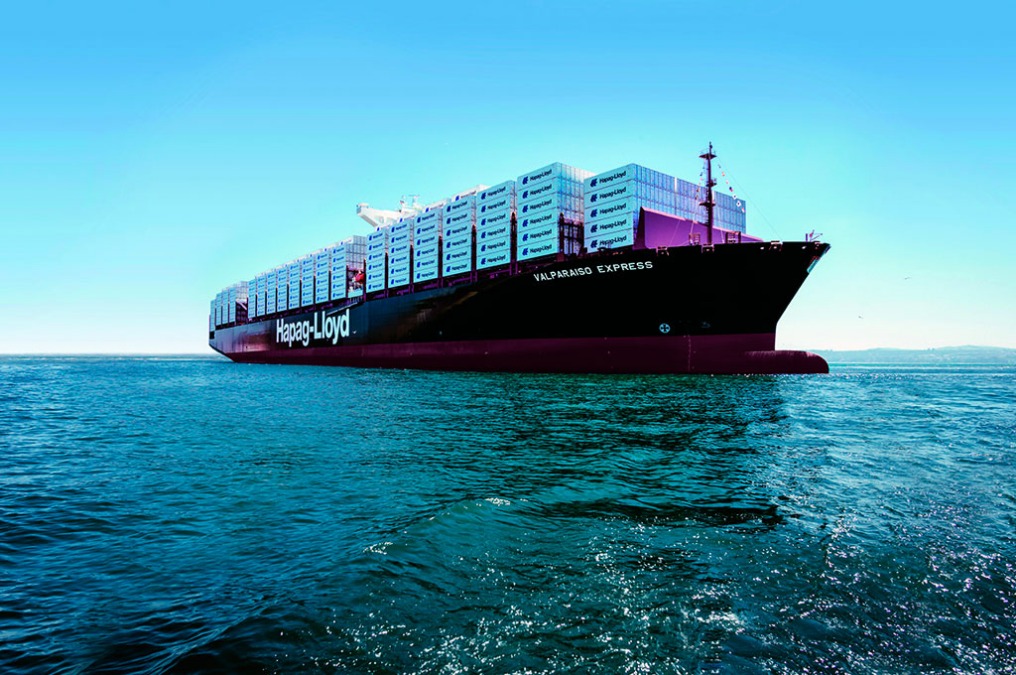
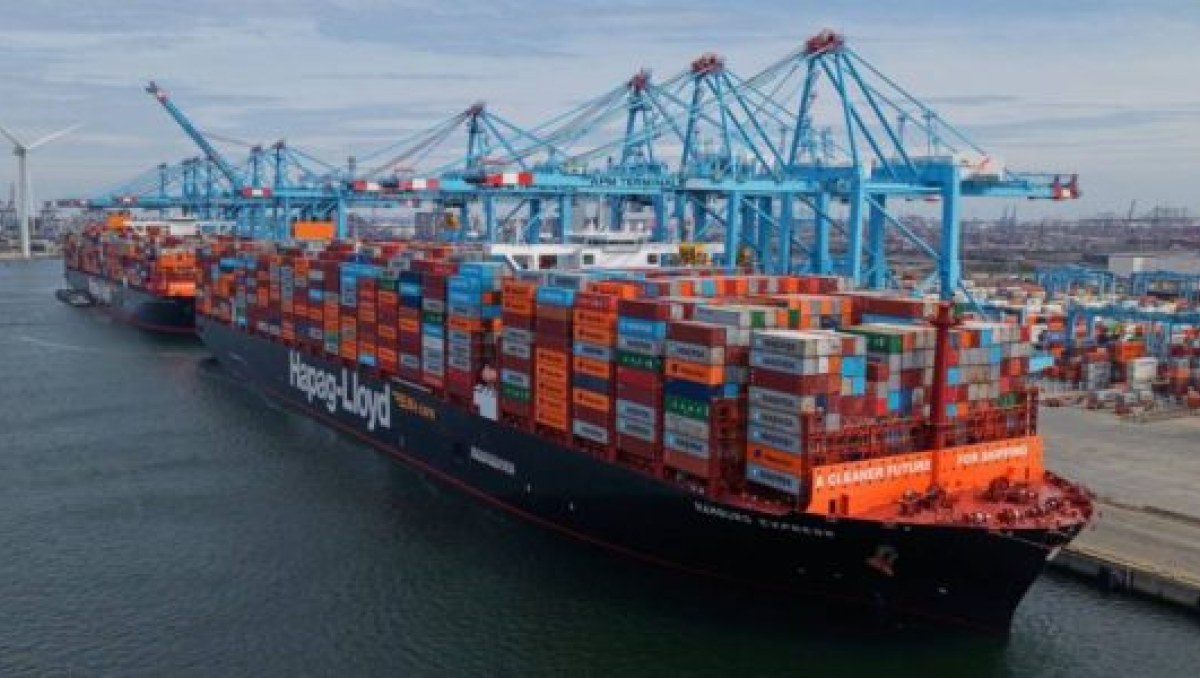
At Hapag-Lloyd, the scenario was more adverse.
The company ended the first quarter of 2026 with EBITDA of US$ 494 million, versus US$ 1.103 billion in the same period of 2025. EBIT shifted from a positive result of US$ 487 million to a negative result of US$ 157 million.
Group profit, which had reached US$ 469 million in the first quarter of the previous year, turned into a loss of US$ 256 million in the first three months of 2026.
Beyond the decline in freight rates, the company attributed the performance to adverse weather conditions in Europe and North America and to disruptions caused by the Hormuz blockade.
Hapag-Lloyd's average maritime transport rate fell from US$ 1,471 per TEU to US$ 1,330 per TEU, while the volume transported remained virtually stable at approximately 3.2 million TEUs.
In the second quarter, the effects of the crisis continued. According to information disclosed by Reuters, Hapag-Lloyd estimated a financial impact of approximately US$ 600 million related to the Middle East crisis. Quarterly net profit declined to US$ 83 million, against US$ 306 million in the same period of the previous year.
Why is Hormuz so strategic?
The problem involving the Strait of Hormuz has a characteristic that makes the crisis particularly complex for navigation.
Unlike the Red Sea and the Suez Canal—where vessels can make the long detour around the Cape of Good Hope—cargoes destined for countries located within the Persian Gulf practically have no alternative maritime route capable of replacing Hormuz.
This transforms the strait into a true geopolitical bottleneck for global logistics.
When passage becomes unsafe, impacts quickly reach shipowners in the form of higher fuel consumption, more expensive insurance, need for storage, changes to port calls, container repositioning, and contracting of alternative solutions.
Impact extends beyond the Middle East
The crisis also demonstrates how regional conflicts can produce global effects on supply chains.
``` ```htmlMaersk did implement additional collection mechanisms to offset extraordinary costs associated with cargo rerouting and handling. At the same time, shipowners began conducting constant safety assessments before authorizing new transits through the strait.
For importers and exporters, the result may show up in the form of higher freight rates, surcharges, deadline changes and lower logistics predictability.
A test for major shipping networks
The results from Maersk and Hapag-Lloyd show that the impact of a geopolitical crisis does not depend solely on company size, but also on the composition of its routes, regional exposure, commercial contracts and ability to rapidly reorganize its network.
Maersk was able to offset some of the pressures through volume growth, operational efficiency and recovery of extraordinary costs. Hapag-Lloyd, meanwhile, more exposed to Atlantic and Middle East routes, recorded significantly greater impact on its operations and results.
The episode reinforces an increasingly present reality in international maritime transport: geopolitics, logistics and freight costs are directly connected.
For Brazilian foreign trade, tracking movements like this has become essential. Even thousands of kilometers away, an interruption in a strategic passage like Hormuz can alter service networks, ship and container availability, fuel costs and the formation of international freight rates.
```