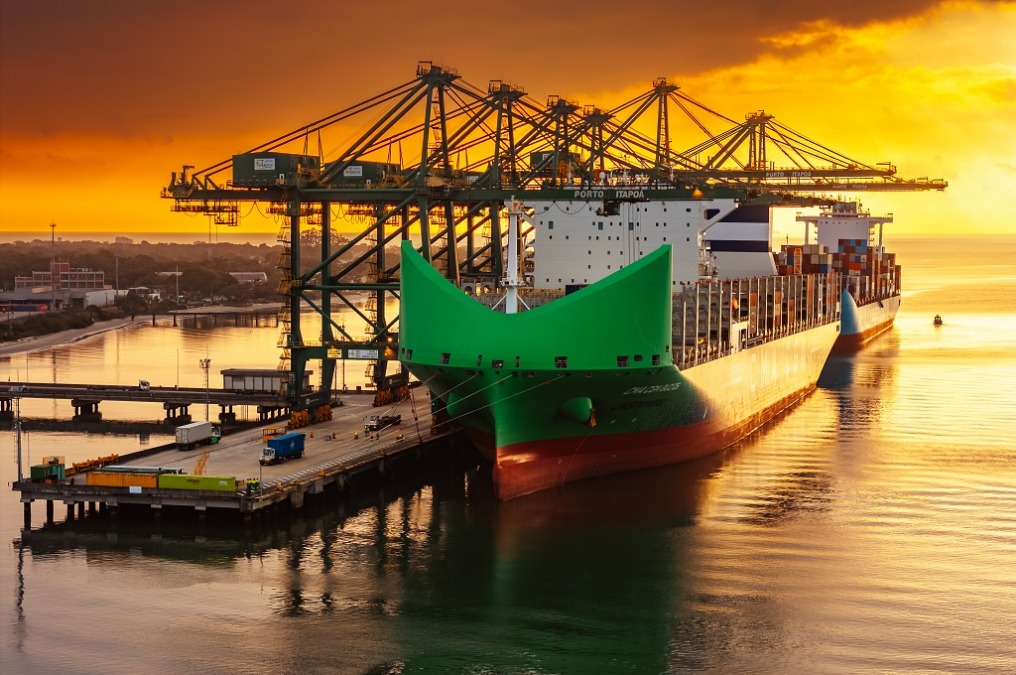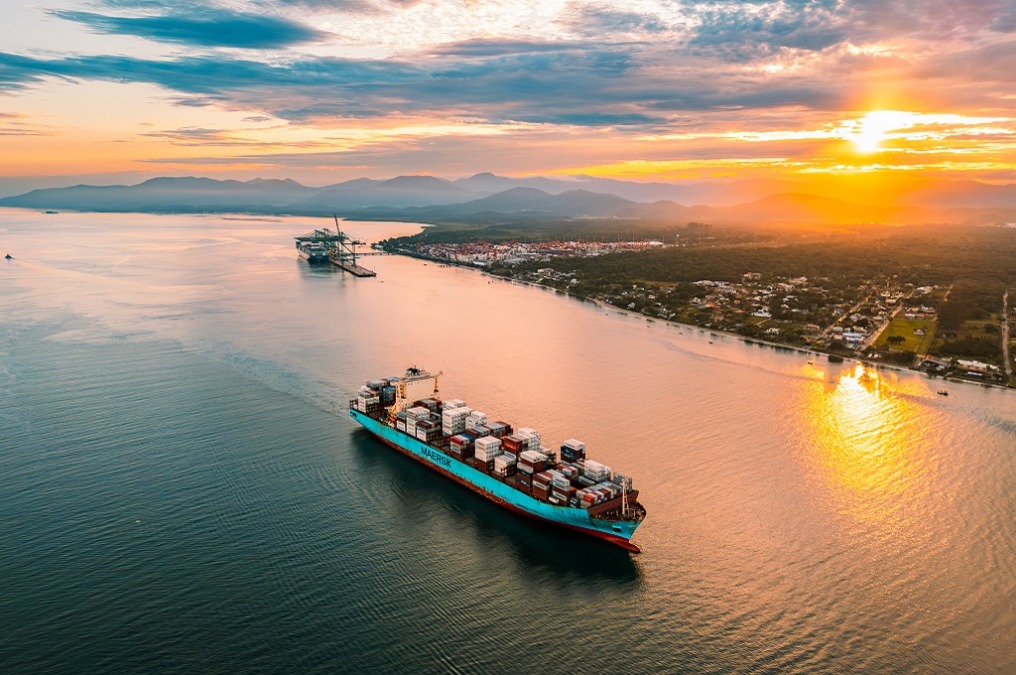
Itapoá Port continues to expand its strategic presence in national and international maritime trade with the arrival of two new shipping services that promise to further strengthen the competitiveness of the Santa Catarina terminal.
The main highlight in the deep-sea segment is the port's inclusion in the Neosamba service rotation, operated by Maersk. The new line will directly connect Santa Catarina to the main logistics hubs in Northern Europe, expanding options for importers and exporters in the region.
The route encompasses major international ports, including Southampton, in the United Kingdom; Rotterdam, in the Netherlands; Hamburg and Bremerhaven, in Germany; Antwerp, in Belgium; Tangier, in Morocco; as well as Santos, Paranaguá, Buenos Aires, Montevideo, and Itapoá.
The new connection arrives at a time of strong commercial relations between Itapoá Port and the European Union. In 2025, approximately 19% of all imported cargo handled by the terminal originated from the EU bloc, equivalent to roughly 285 thousand TEUs. Among the standout segments are food and beverages, chemical products, and industrial machinery.
In exports, the European Union accounted for approximately 12% of cargo shipped by the terminal, totaling around 180 thousand TEUs. Forest products, home appliances, electronics, machinery, and steel cargo are among the main items destined for the European market.
According to Itapoá Port's CEO, Ricardo Arten, the expansion of international connectivity reinforces the terminal's strategic position.
"Santa Catarina has an industrial base highly connected to the European market, and Itapoá Port is strategically positioned to meet this demand with logistics efficiency, proximity to productive clusters, and increasingly robust maritime services," the executive highlighted.
In the domestic market, the terminal also expands its operations with the arrival of the ALCT1 service, from Aliança Navegação e Logística, scheduled to begin operations in June. The new cabotage route will connect Itapoá to Manaus with an estimated maritime transit time of approximately 13 days.
The service will feature two weekly calls at the terminal and is expected to primarily handle industrial cargo, electronics, consumer goods, and refrigerated products transported between the South and North regions of the country.
The news complements the existing BRACO service offering, operated by Mercosul Line and CMA CGM, further strengthening national logistics integration.
Cabotage figures demonstrate the growing relevance of this mode of transport. In 2025, Itapoá Port handled approximately 298 thousand TEUs in this segment, recording 32% growth compared to the previous year. The performance consolidated the terminal as the leader in cabotage operations among ports in southern Brazil.
For Ricardo Arten, the advance in cabotage reflects a shift in market behavior seeking more efficient and competitive solutions.
"Cabotage is gaining ground because it combines cargo handling capacity, operational predictability, and logistics competitiveness. The growth recorded at Itapoá Port shows that the market is seeking increasingly efficient solutions for cargo transport in Brazil," he stated.
With the expansion of international and domestic connections, Itapoá Port reinforces its role as one of the country's main logistics hubs, contributing to the development of Brazilian foreign trade and strengthening of national productive chains.
```